
Search Virginia Criminal Court Records
Virginia criminal court records are public documents filed at Circuit Courts and General District Courts across the state's 95 counties and 38 independent cities. You can search them online for free using state-run court portals or visit the courthouse clerk in person. Records cover felony charges, misdemeanor cases, traffic violations, and court dispositions from every level of the state's court system. This guide explains where to find Virginia criminal court records, how the online search tools work, and how to get copies of case documents from any court in the state.
Virginia Criminal Court Records Overview
Virginia Criminal Court Records Online
The Virginia Judicial System runs several free online tools for searching criminal court records. The most broad is the Online Case Information System 2.0. It covers adult criminal cases from Juvenile and Domestic Relations District Courts, criminal and traffic cases from General District Courts, and criminal cases from select Circuit Courts across Virginia. You search by name, case number, or hearing date, and the system pulls live data from each court's case management system.
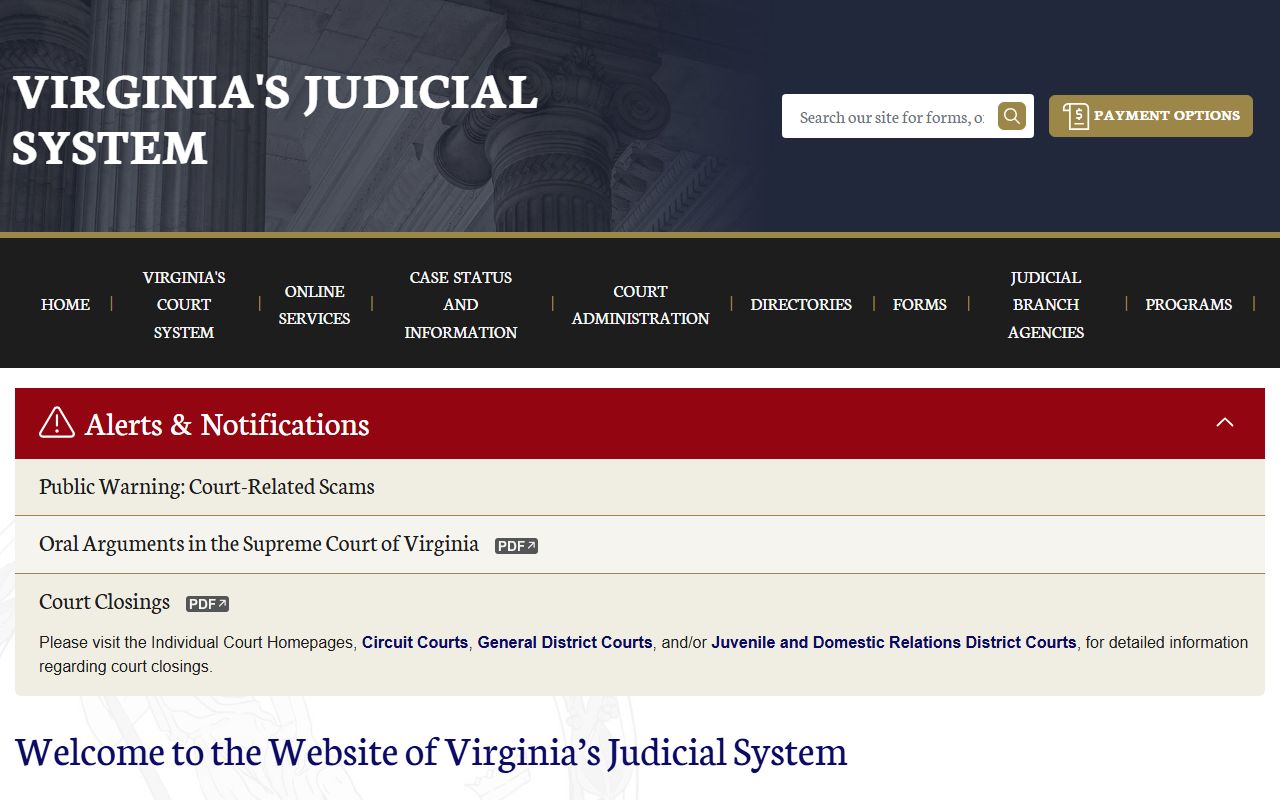
The Virginia Judicial System homepage at vacourts.gov connects to every court-level case search tool in the state, including Supreme Court, Court of Appeals, Circuit Court, and General District Court search portals.
The OCIS 2.0 statewide search tool is the fastest way to search Virginia criminal court records without knowing which specific court handled a case. It searches across court levels at once. Results show the court location, case type, charges, hearing dates, and current case status. You can also subscribe to the Case Alert Subscription System through this portal, which sends free text or email notifications when a case record is updated.
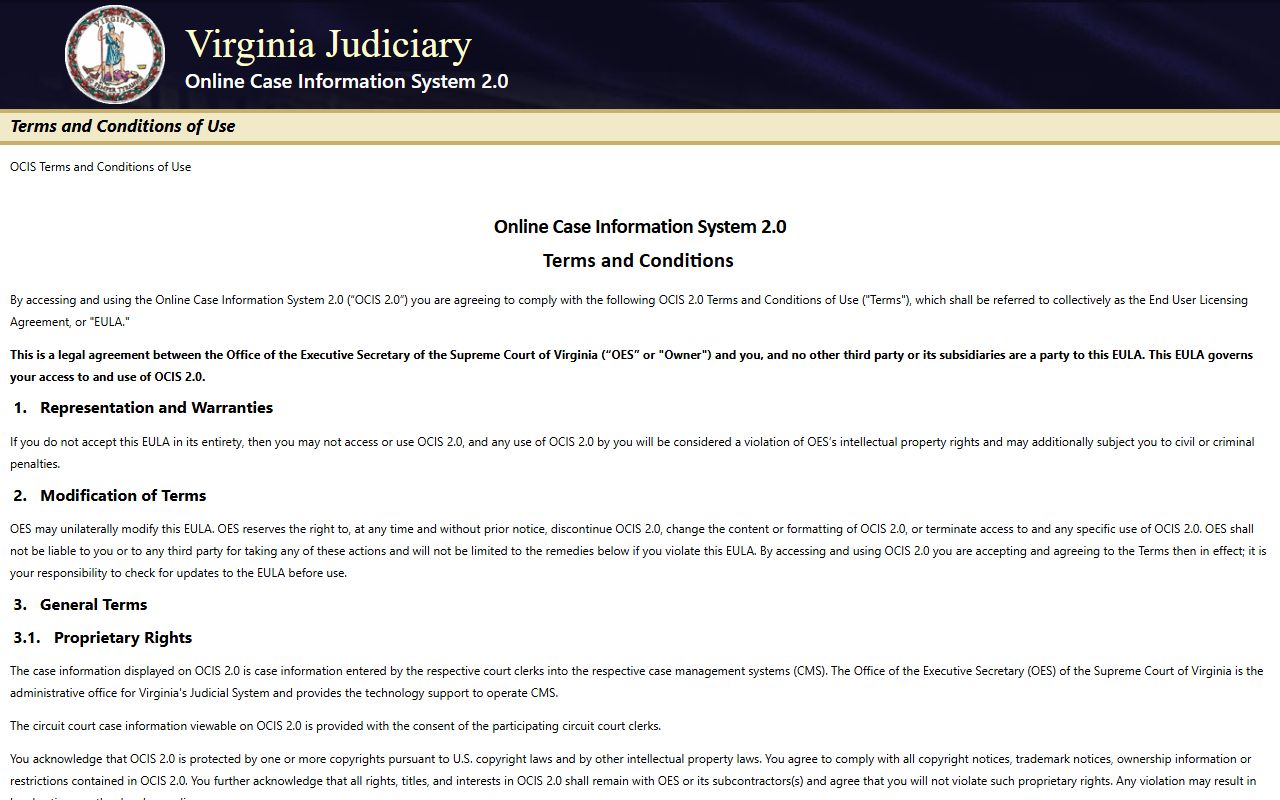
OCIS 2.0 is maintained by the Office of the Executive Secretary of the Supreme Court of Virginia, which operates the technology supporting case management systems for all Virginia courts.
The General District Court online system handles misdemeanor and traffic case searches by locality. Every county and independent city in Virginia has a General District Court. These courts handle misdemeanors, traffic violations, and preliminary hearings for felony cases. The online system shows civil, criminal, and traffic case records and lets you make online payments for certain fines and costs. It is a separate search tool from OCIS 2.0 and is better when you already know the case was a GDC matter.
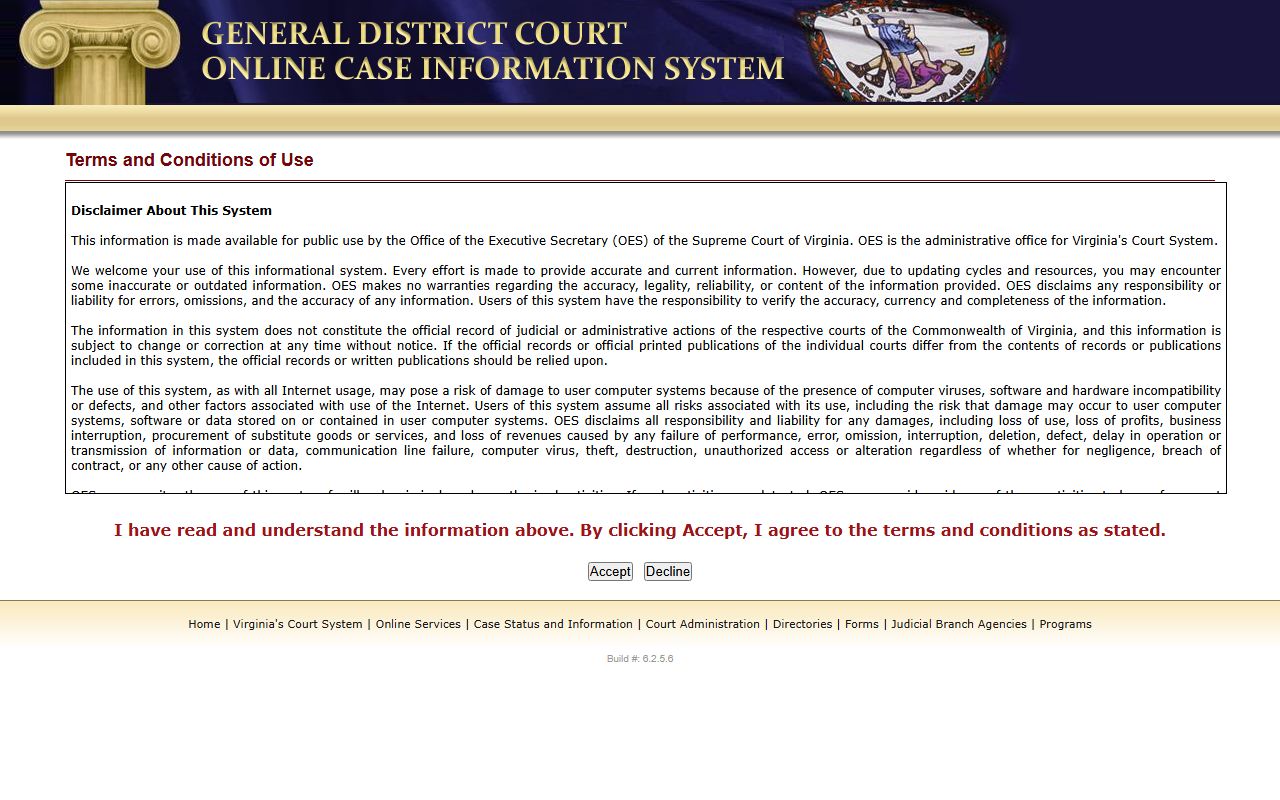
The General District Court system at eapps.courts.state.va.us/gdcourts lets you select a locality and search civil, criminal, and traffic case records with options to pay fines online for eligible cases.
The Virginia Judiciary Online Services portal brings all these tools together. From there you also reach e-filing, the Electronic Voucher Payment System for court-appointed counsel, and the Virginia Appellate Courts Electronic System. The Case Alert Subscription System linked from this portal is free and can monitor any case in a participating Virginia court for updates.
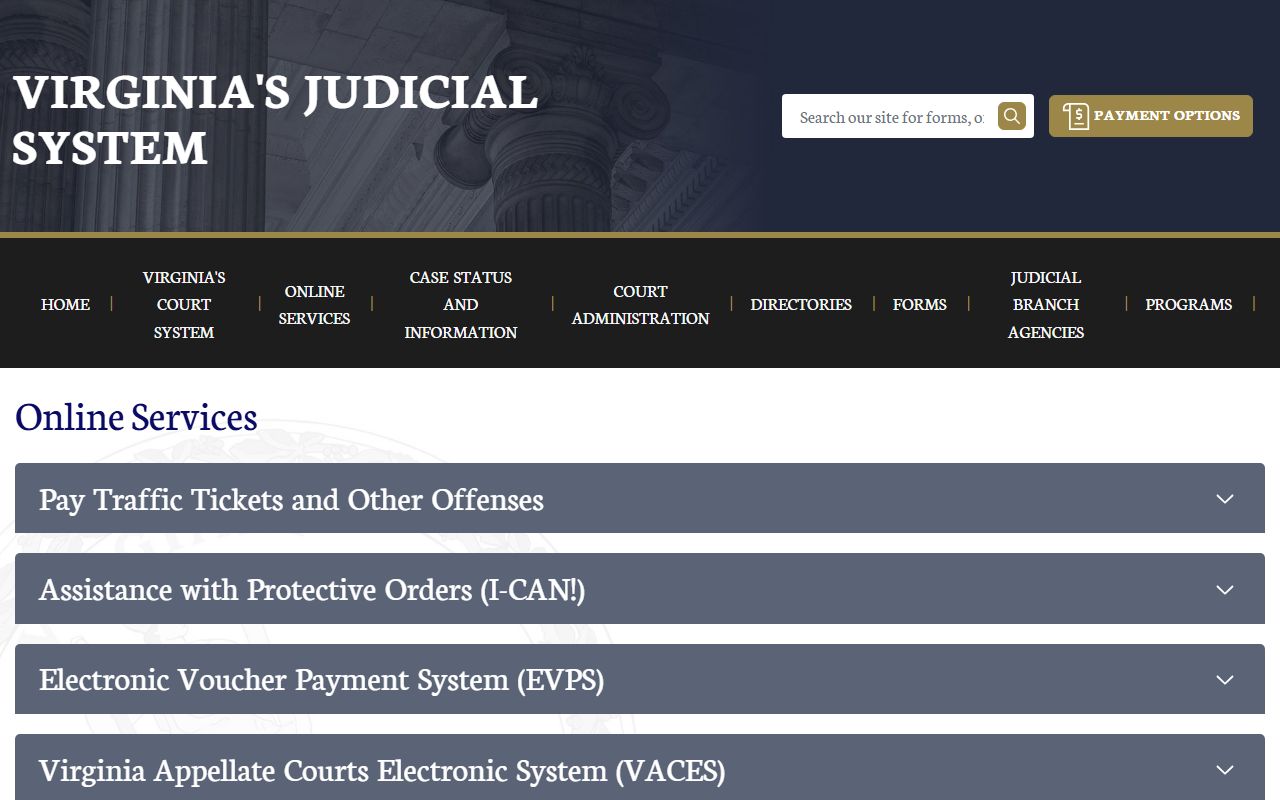
The Online Services portal also provides access to the Virginia Date of Birth Confirmation system, which organizations may use to verify criminal case information for individuals in participating courts.
How to Search Criminal Court Records in Virginia
Start at the case status and information portal at vacourts.gov. Pick the search tool that fits what you need. OCIS 2.0 is best when you are not sure which court handled a case. The General District Court system is better for misdemeanors and traffic. The Circuit Court system at CJISWeb covers felony cases and is real-time.
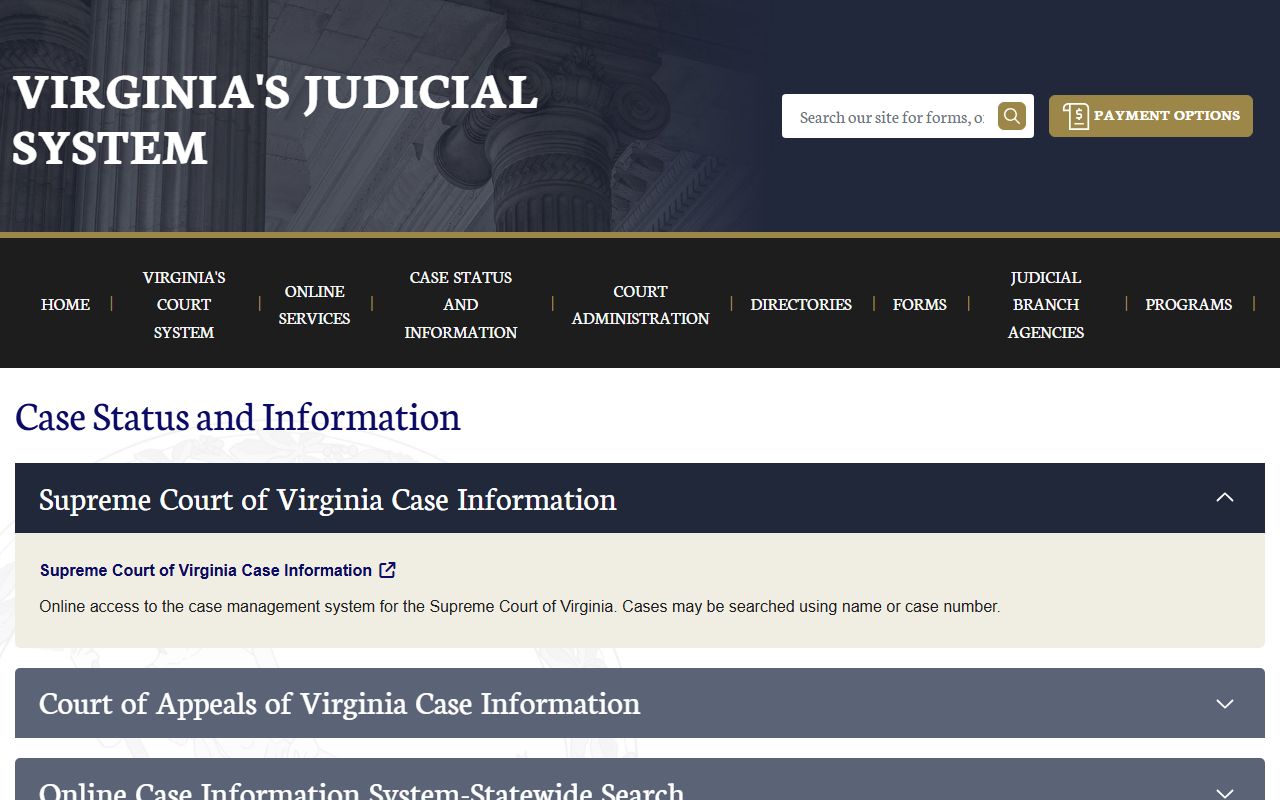
The case information portal links directly to every court-level search system and describes the types of criminal court records each one covers, including which courts participate.
To search the Circuit Court case system, go to CJISWeb and select a locality from the dropdown. Search by name, case number, or hearing date. For case numbers, use upper case "CR" for criminal and "CL" for civil. The system is real-time. Prince William County notes that 117 of Virginia's 120 Circuit Courts use the Supreme Court case management system, so most courts are covered. If a court is not on the system, you will need to contact the clerk's office directly.
In-person requests work for any court. Go to the Circuit Court Clerk or General District Court Clerk in the county or city where the case was filed. Staff can search by name or case number and make copies while you wait. Standard copies cost $0.50 per page. Certified copies add $2.00. Triple-seal copies add $2.50 more. Hours vary but most offices are open Monday through Friday from 8:00 or 8:30 AM to 4:00 or 4:30 PM. Call ahead to confirm.
Note: Virginia's online case search systems may not include all courts or all case types. Older records, sealed cases, and juvenile delinquency records typically will not appear in online search results.
Types of Criminal Court Records in Virginia
Virginia criminal court records come from three types of trial courts. Circuit Courts handle felonies. General District Courts handle misdemeanors and traffic cases. Juvenile and Domestic Relations District Courts handle cases involving minors and certain family matters. Each court keeps its own records, and what you can access depends on the court type and the case details.
Circuit Court criminal records are the most detailed. A typical felony case file includes the indictment or information charging the defendant, bail and bond documents, motions from both sides, the plea or trial record, and the sentencing order. If the person was convicted, the record shows the sentence, including any probation or post-conviction supervision terms. Circuit Court records are maintained by the Clerk's office in each locality and are open to the public unless the court has ordered them sealed. Some Circuit Courts have records going back to the colonial era, particularly through secure remote access to land and court records for registered users.
General District Court records cover Class 1 and Class 2 misdemeanors, traffic violations, and preliminary hearings for felony cases before they go to Circuit Court. The GDC does not hold jury trials. All cases are heard by a judge. If a person appeals a General District Court decision, the case goes to Circuit Court and starts over completely in what is called a de novo hearing. GDC case records are searchable online and are also available at the courthouse in person.
Juvenile and Domestic Relations District Court records have more limited public access. These courts handle juvenile delinquency, child custody and support, child abuse and neglect, and domestic violence protective orders. Adult criminal charges like domestic assault can also appear in J&DR court. Records involving minors are not open to the general public. The clerk can only give limited information to parties directly involved in the case. Some adult J&DR criminal case information appears in OCIS 2.0 depending on the court's participation in the system.
Virginia's Four-Level Court Structure
Virginia has four levels of courts. The Supreme Court of Virginia sits at the top with seven justices elected by the General Assembly for 12-year terms. Below it is the Court of Appeals with 17 judges, which hears appeals from Circuit Courts in criminal cases, traffic matters, and domestic relations. Below those are the Circuit Courts and District Courts where criminal cases begin and are tried.
There are 120 Circuit Courts in 31 judicial circuits. Every county and independent city in Virginia has one. These are the only trial courts with general jurisdiction in the state. They handle all felony criminal cases, civil claims over $25,000, and appeals from General District Court. The Circuit Court Clerk's office keeps the complete case file for every case filed there. These records can go back generations in older counties.
General District Courts operate across 32 judicial districts, with one in every county and independent city. They handle traffic violations, misdemeanor criminal cases, and preliminary hearings for felony charges. They do not conduct jury trials. The GDC has exclusive authority over civil claims up to $4,500 and shares jurisdiction with Circuit Courts for claims between $4,500 and $25,000. Appeals from GDC go to Circuit Court, where the entire case is heard again from the start.
Criminal History Records and the CCRE
The Virginia State Police manages the Central Criminal Records Exchange, or CCRE. This is Virginia's official repository for criminal history information, run by the Criminal Justice Information Services Division. All law enforcement agencies, courts, and corrections institutions in the state are required by law to report arrests, charges, and case dispositions to the CCRE.
The Virginia State Police website at vsp.virginia.gov provides information on how to request a criminal history record check through the CCRE for authorized purposes under state law.
Under Virginia Code § 19.2-389, access to criminal history records from the CCRE is limited. The person named in the record can request their own history. Law enforcement agencies have full access. Some other parties authorized specifically by law can request records for defined purposes. Fingerprinting is required for all felony arrests and certain misdemeanors. The CCRE holds arrest reports, charge details tied to Virginia Code statutes, court dispositions, and post-conviction data like probation and parole status. The CCRE connects to the National Crime Information Center and follows FBI regulations.
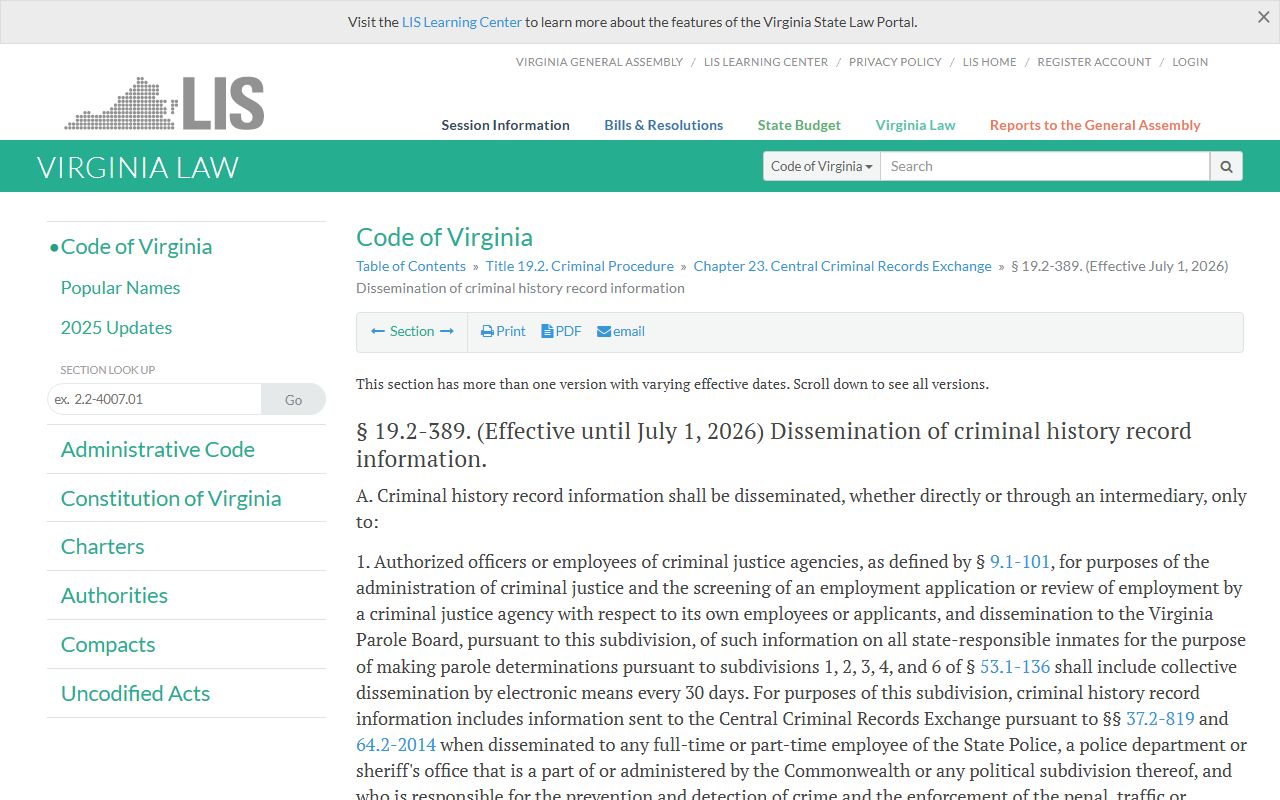
Virginia Code § 19.2-389 sets the rules for who may receive criminal history record information from the CCRE and the conditions under which that information can be shared with different parties.
The CCRE data is more comprehensive than what you find through the public court search portals. Online case systems like OCIS 2.0 and CJISWeb show case-level data entered by court clerks. The CCRE holds arrest-level data from law enforcement agencies as well. For a full criminal history background through official channels, requests go through the Virginia State Police rather than through the public court search websites.
Public Access to Virginia Criminal Court Records
Virginia court records are open to the public under the state's Freedom of Information Act. The Virginia FOIA, Code § 2.2-3700 et seq., guarantees citizens access to public records held by public bodies. Court records are public records. Anyone can request them. You do not need to explain why. The law states that all records are presumed open and that exemptions must be interpreted narrowly and applied only where specifically authorized by statute.
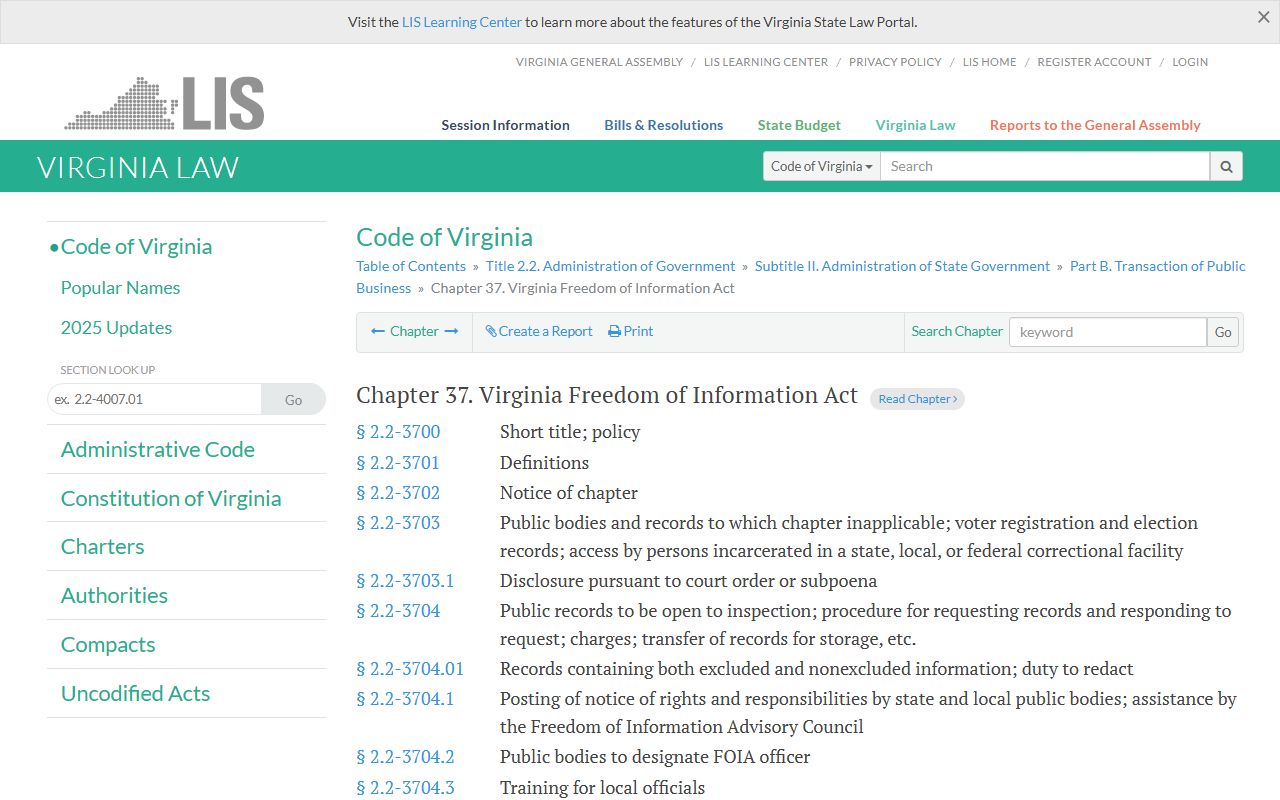
The Virginia FOIA statute at Code § 2.2-3700 sets out the rules for public records access, including procedures for making requests, how public bodies must respond, and what fees can be charged for copies.
Public bodies must respond to FOIA requests within five working days. The clock starts the day after the request arrives. Weekends and holidays do not count. For criminal investigative files requested under § 2.2-3706.1, the agency gets an extra 60 working days. If costs are expected to exceed $200, the agency may ask for a deposit before it begins pulling records. The FOIA Advisory Council provides free guidance to anyone with questions about how the law applies to their request.
Some records have limits on access. Juvenile delinquency records are not open to the public. Records that have been expunged or sealed are removed from public systems. Social security numbers and similar personal identifiers are redacted from public court filings. Outside those exceptions, most Virginia criminal court records are open to anyone who requests them at the courthouse or searches the online portals.
Virginia Record Sealing and Expungement
Virginia allows some criminal court records to be sealed under Code Chapter 23.1, §§ 19.2-392.1 through 19.2-392.17. Section 19.2-392.2 lets a person petition to expunge police and court records when a charge was dismissed, entered a nolle prosequi, or resulted in an acquittal. Once a court grants the petition, the records are removed from public search systems including OCIS 2.0.
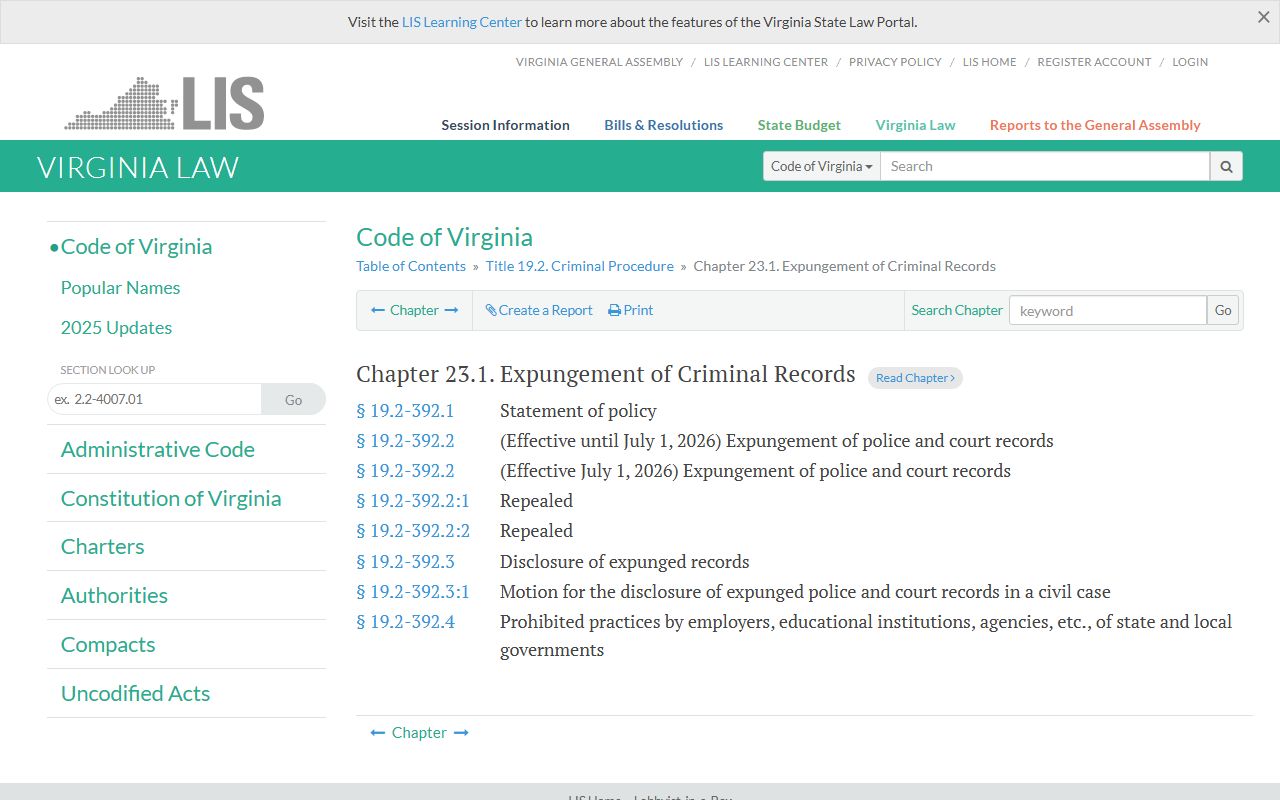
Virginia's record sealing statutes at Chapter 23.1 were expanded by the General Assembly to allow sealing of certain misdemeanor and felony convictions after waiting periods, with new provisions taking effect July 1, 2026.
Beyond dismissed charges, new sealing provisions delayed to July 1, 2026 create procedures for sealing certain misdemeanor and felony convictions after waiting periods without additional convictions. Once sealed, records are no longer visible to the public through the court's online tools. Law enforcement retains access to sealed records under specific circumstances and sealed records may still be considered during sentencing in future criminal proceedings.
Not all offenses can be sealed. Section 19.2-392.12 lists offenses that are not eligible, including DUI, domestic assault, involuntary manslaughter, and operating a commercial vehicle under the influence. If you search for Virginia criminal court records and nothing comes up, the records may have been sealed or expunged, the court may not participate in the online system, or the case may pre-date the current electronic records period.
Legal Help and Self-Help Resources in Virginia
The Virginia Court Self-Help website gives free neutral legal information to people who represent themselves in court. Run by the Virginia Access to Justice Commission, it covers protective orders, custody, traffic matters, small claims, and other common legal problems. Judges, court staff, and clerks cannot give legal advice. They can only give legal information. The self-help site is the place to start if you need to understand your options.
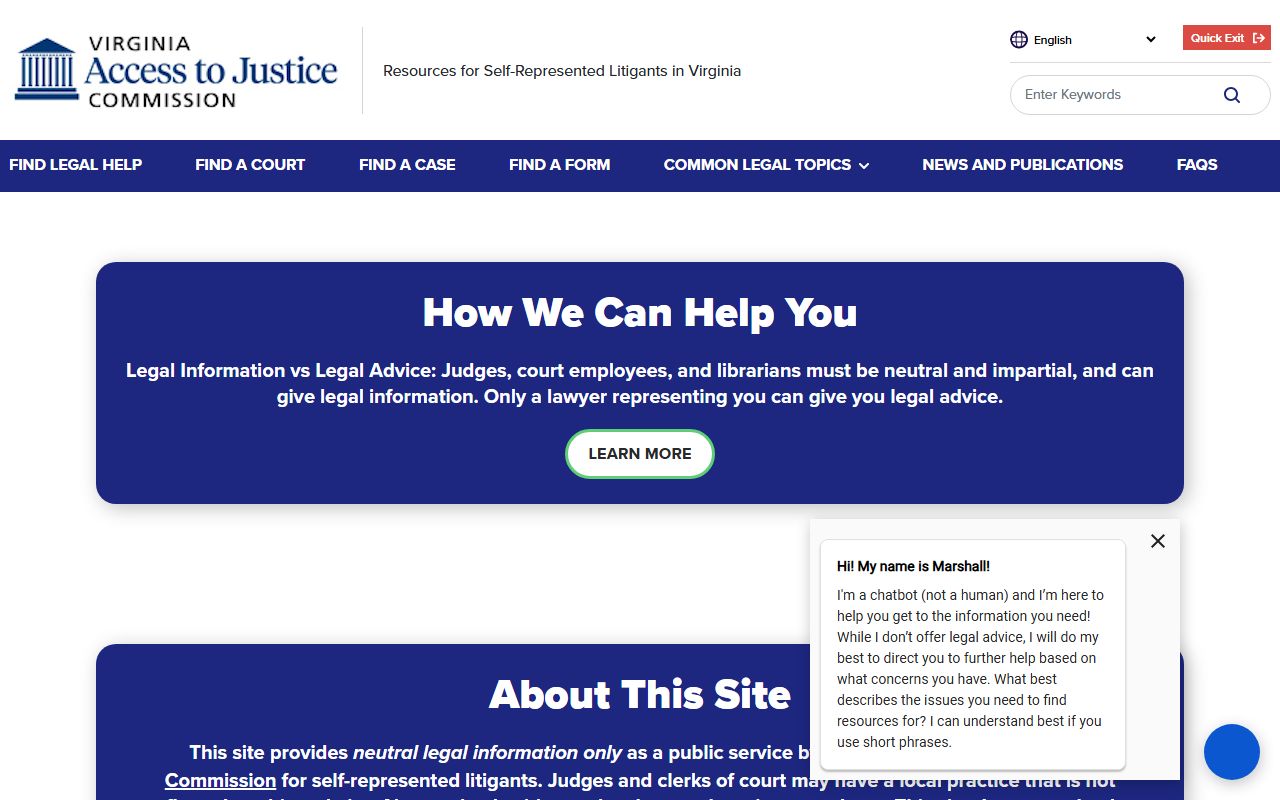
The self-help site at selfhelp.vacourts.gov also links to Virginia Free Legal Answers, a free service where Virginians with limited income can post legal questions and get responses from volunteer attorneys at no cost.
Virginia Free Legal Answers is a free online service for Virginians who cannot afford an attorney. You post your question, and a volunteer lawyer answers it. No cost. No appointment needed. Accessible from any device, including computers at public libraries. For people trying to understand a criminal court record, get copies of a case file, or look into expungement options, this service can provide meaningful guidance.
The Virginia Judicial System also provides interpreter services through its Foreign Language Services Division. If you have limited English proficiency and need help navigating the courts or understanding court records, interpreter services are available at no charge. Contact the court ahead of time to arrange them. ADA accommodations are available as well. The state's goal is to make the court system accessible to every Virginian regardless of language or disability status.
Browse Virginia Criminal Court Records by Location
Virginia criminal court records are maintained at the local level in each county and independent city. Select a location below to find court contact details, online search tools, and specific resources for criminal court records in that area.
Virginia Counties
Each of Virginia's 95 counties has a Circuit Court Clerk handling felony cases and a General District Court for misdemeanors and traffic. Find local criminal court resources by county.
Major Virginia Cities
Virginia's independent cities each operate their own court system separate from any surrounding county. Find criminal court records from any major Virginia city below.